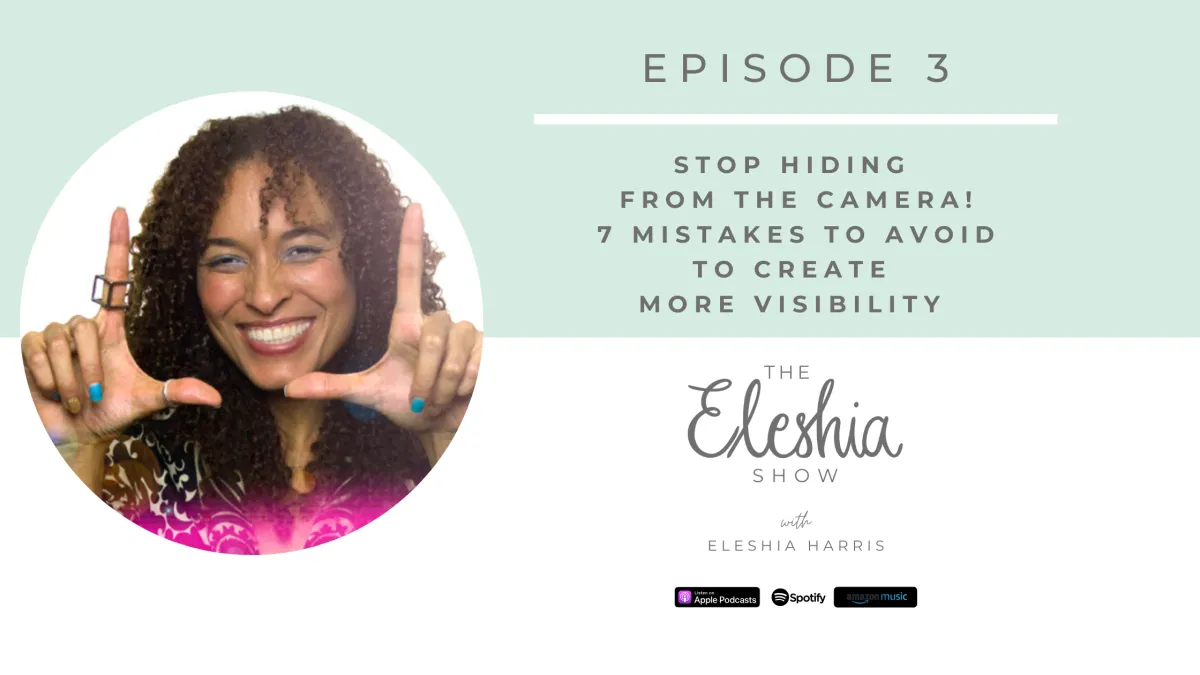
Episode 3 | Stop Hiding From the Camera: 7 Mistakes to Avoid to Create More Visibility with Sarah Michelle Brown
Episode 3 | Stop Hiding From the Camera
Featuring Sarah Michelle Brown
Welcome
Do you avoid being on camera because you don't feel confident, worry about what people will think, or believe you need everything to be perfect before you press record?
In this episode of The Eleshia Lifestyle Podcast, I’m joined by visibility and confidence expert Sarah Michelle Brown to explore the common mistakes that stop entrepreneurs from showing up online. Together, we discuss practical ways to build confidence, become more visible and share your message authentically without letting fear hold you back.
Listen to the Episode
Also available on:
Spotify
Apple Podcasts
In This Episode
Why so many business owners avoid being on camera.
The mindset shifts needed to build confidence and visibility.
Seven common mistakes that stop people from showing up online.
How authenticity creates stronger connections than perfection.
Practical tips for creating engaging video content.
Why visibility is essential for growing your business.
“People who are uncomfortable on camera tend to have a few traits in common: being a perfectionist, having tender hearts, and being scared to be judged.”
- Sarah Michelle Brown -
Episode Summary
Being visible can feel uncomfortable, especially when you're worried about being judged or believe you need to look or sound perfect before appearing on camera. In this inspiring conversation, Sarah Michelle Brown shares why confidence is something you develop through action rather than something you wait to feel.
Together, we explore the common mistakes that keep people hidden, practical ways to become more comfortable on camera and why showing up authentically helps build trust with your audience. Whether you're an entrepreneur, coach or creative, this episode will encourage you to stop hiding and start sharing your expertise with confidence.
Key Takeaways
Progress is more important than perfection.
Confidence grows through consistent action.
Authenticity creates stronger connections than polished performances.
Visibility is essential for building trust and growing your business.
Your message can only make an impact if people see and hear it.
About Our Guest
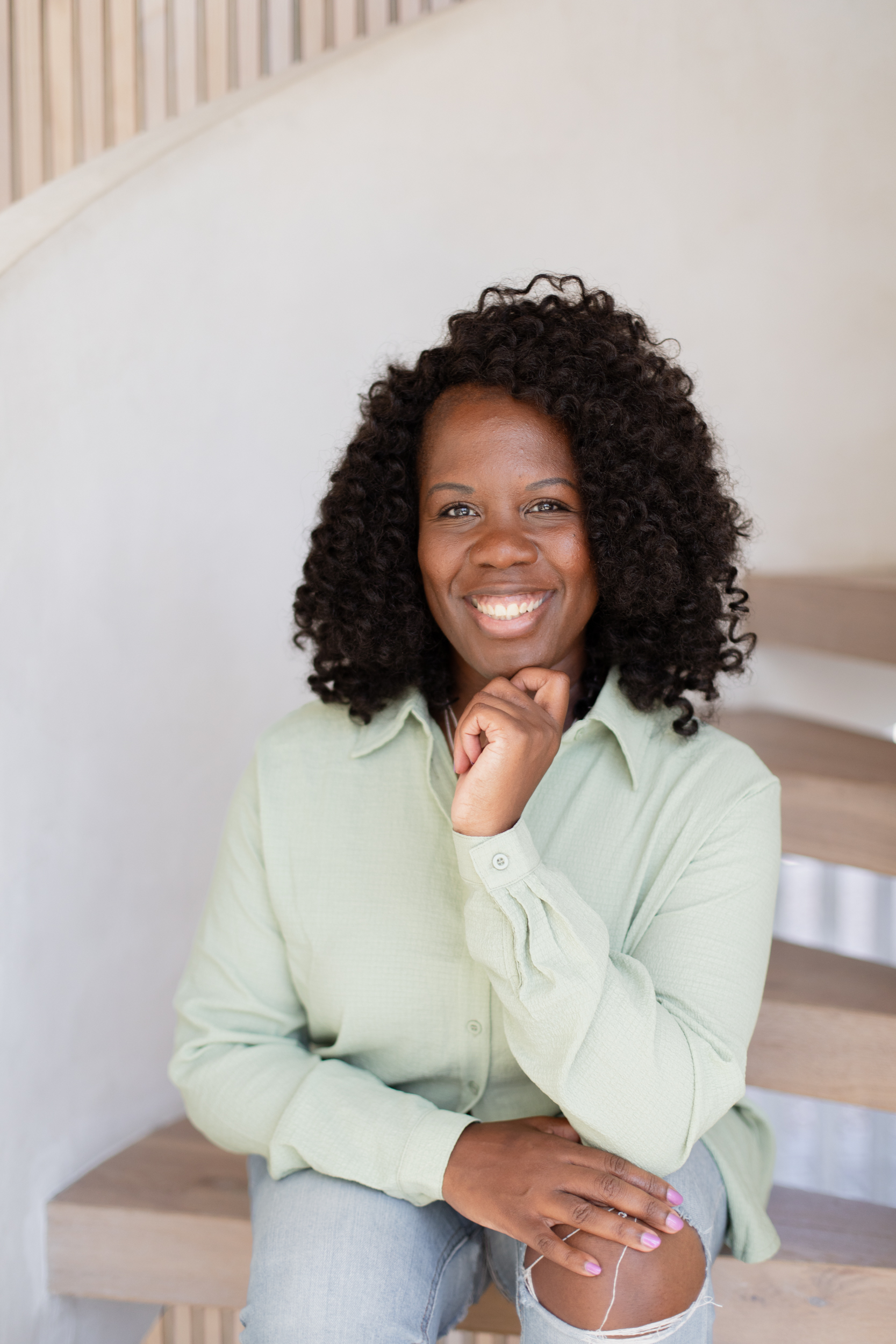
Sarah Michelle Brown helps entrepreneurs build confidence, improve their visibility and show up authentically online. Through practical strategies and mindset coaching, she empowers business owners to overcome fear and use video to grow their personal brand.
Prefer to read? Browse the full transcript below, or listen using the player above.
Read the Full Transcript
Intro: Hi, I'm Eleshia Harris and I am your host of The Eleshia Show. I am also the founder of eleshialifestyle.com and I'm so excited that you're here with me and I am here with you. I'm also really appreciative. Each week, I will be sharing strategies and stories and insights to help you enhance your well-being and to build your business while still navigating life because sometimes we often try and separate the two. And let's face it, if you are not well, you have no business. So let's try and work with these two things combined because we can to enhance your lifestyle.
Again, I'm really excited to have you here. I have wanted to put together a podcast for over two years. And so here I am ready to share. Let's get into this week's episode.
Eleshia: Let's talk about visibility. They always tell you that you have to be visible and consistent. However, what if it overwhelms you and you don't know where to start and it doesn't feel comfortable for you and all of the rest. I mean, then you don't be visible at all.
So when I met Sarah, I knew that I had to share her magic with others. She makes being visible look so easy, and she is such a joy and knowledgeable. And I just allow for her spirit and her passion about what she does. Nothing like Sarah more than when somebody suddenly finds their fullness and their beauty, their humor, their vulnerability, and their passion on camera.
Sarah is an award winning artist who has written scripts, directed for the stage and music videos, documentaries and films. Wow. Yes, she's got a lot of experience in front of the camera and behind. Sarah turned her two decades of film experience into a method of training for passionate business owners, like yourself, to get past a fare so that you can make awesome videos for your businesses.
Lastly but not least, Sarah also directs exclusive videos for her clients while continuing to pursue her own artistic projects. Making videos may not be your area of expertise, but it is hers. So, I'm so excited that we got to have this conversation and she will be sharing with you seven tips that I was surprised. You'll hear my excitement in today's episodes, but there were things in there that I hadn't even thought about. So it's always good to have somebody else's perspective.
I really hope you enjoy this episode. Let's get into it.
Welcome, Sarah Michelle. I'm so excited to have you here. The listeners will know that I'm so excited about everybody that I have. That is my tagline, because this has been two years in the making of just having these conversations. So it's so good you're here talking about visibility because that's one of the reasons why I hadn't done it in the past. Because I was scared of being seen and scared of sharing my story and scared of people having an opinion.
Sarah Michelle: Yes. The opinions.
Eleshia: Exactly. And what this last year has really shown me is we can't control everything. And so if you really want to get something done, if you've really got something that you really want to do, you've just got to feel the fear, like the book and do it anyway.
Sarah Michelle: Can I just say I have this book sitting right here.
Eleshia: That was just intuitive from the UK to Canada?
Sarah Michelle: Yeah.
Eleshia: I love that. So again, thank you so much for being with us today. I'm a fan of your work. I love what you do. You do it with such ease. You make it look really easy. And I just want you to share how you make it look so easy and just your story as to how you got to where you are and the reasons why this is such a passion of yours.
Sarah Michelle: Yeah. Ooh, I love it. Shall I start with just how I started this business, how it came to me and what I was doing before. So I come from an acting and filmmaking background and I'm also an introvert. So I'd like people listening to know that like, yep. I am not actually an extrovert, though I may seem to be one. But I'm definitely an introvert by nature. Like when I need to process something, I go in the woods to an Island. That's definitely where I'm at when it comes to self-expression.
So I started off as an actor. I went down to New York and studied theater down there. And started to learn how to come more out of my shell and to get used to people, looking at me like to be in front of an audience.
And when I returned back to Toronto, I started auditioning for movies and short films and things like that. And I got a part in this short film. And I got the lead part of this surf phone that was going to be seen by industry people. Okay. So. I was very excited about this and it was actually a really good visibility opportunity.
And then I got to set and Eleshia, the words went out of my brain. I forgot my lines. I froze up. I was like shrinking myself. I got really, really, really intimidated. And I remember the makeup artist came up to me and she was like, Sarah, she said. Well, you're the lead actress of this short film. You need to show up and you need to be the star.
And I had this horrific realization that I did not feel like the star. I really didn't know what to do with that. So I continued to do my best. And when I saw the film being screened at this theater, like a real theater and all these industry people were there, I looked up with horror at this giant screen with my face, looking so uncomfortable and my introvert was like, just suck it up. Suck it up. You gotta sit there.
So I realized I had to learn a way to be in the spotlight, but in a way that worked for me in my introverted ways. If I make it about myself, like that woman was saying, I need to be the star, then I will likely run for the hills. But if I find a way to make it about something bigger than me, something else, then my focus shifts. And I'm able to allow my personality to shine through and allow all that stuff to come through. But I had to learn how to do that. It was a real journey.
From acting, I started to write and then I started to direct as well. So I've directed some like documentaries, short films, music videos. I brought a stage play of mine to New York back in 2013 to rave reviews. So much fun, but what's interesting, in 2013, after I bought the plate in New York and I came home, I was exhausted. I was broke. And I was just like, I need something else. So that I'm not dependent on my arts.
I just need something else. It just takes a lot of energy to be an artist. And then so much of it is like luck and timing to really knock it out of the park. So I had met some entrepreneurs that year and I had taken my first online business course. And I was talking to them one day and I said, guys, what do you see for me?
I want to start a business, but I don't know what it is. So they went to my website and we're all talking and they're like, so wait, you're comfortable on camera. You're an actor like real-life actors. And they're like, and you're a director, so you're good behind the scenes and know how to put something together. Here's your business that's going to help us because we suck on camera. We hate the thought of putting videos together, but we know we need to do it. So that's your business.
And so Videos that Shine was born and my very first client came from that pack of ladies. So that's how I'm here today and running my business and still working on creative ideas for my art side. And it's just so much fun.
Eleshia: It's a lovely plan, isn't it? You have to do everything that you really are passionate about.
Sarah Michelle: Yes. It's so much fun. It really is good.
Eleshia: I love that story. And it's funny because people always see what sometimes you can't see for yourself.
Sarah Michelle: Yes, absolutely. So I had several friends of mine who were in the film industry when I was just acting and I'd started writing. Several people were like, so Sarah, when are you going to start directing? So Sarah, when you're ready to start directing, have a camera you can use. So Sarah, and then I was like, I don't know what you're talking about. Even when I was in theater school and taking my first baby steps as an actor, my fellow classmates were like, so when you start directing, you're going to cast us in things. And I'm like, what are you talking about. I definitely didn't see it in myself. It took other people's reflection before I could see it in myself.
Interestingly enough is the same with my clients. They don't really see how beautiful and amazing and connective they can be on camera. They need somebody else to reflect. That's kind of cool.
Eleshia: That is very cool. That's one of the reasons why, again, as I said, you came to mind when I was deciding to do the podcast, because I remember you reached out to me and she was like, I haven't seen you in a while. And I was like, if only she knew that I'm hiding over here, they want to be visible right now but you knew.
Sarah Michelle: Yeah. I have a spidey sense that can go off sometimes. I'm like, something's happening over there.
Eleshia: Yeah, you knew. And I was like, how does she know this is what's happening at the moment? I'm just going insular and I am finding a way and just doing me, but not in a visible way.
Sarah Michelle: Yeah. Part of that is because I also go there. I'm not nearly as bad as I used to be because I am generally a pretty private person, but I have a strong desire to communicate at the same time. Say a music video of mine was going on TV or whatever, I would hibernate after a heavy period of putting myself out there and being around people and doing the thing and being accessible.
So after all the hullabaloo died down, I would go into six months of hibernation and no one would see me. So I've definitely been there. My periods of hibernation are much shorter now. For people who have introverted tendencies or strong introverts, like it is also important for us to have quiet time and to ease away from the action to recharge. That's how we recharge our energy. It's not from being out there all the time, that will exhaust us. And all of a sudden you're like, why am I burnt out? Oh, because you haven't hibernated for awhile.
Eleshia: Thank you for saying that because it is so important. It's so important. So
Sarah Michelle,
you're going to be sharing with us some rookie tips that as people who don't want to be visible, but know that they have to be visible, need to remember.
Sarah Michelle: Yeah, absolutely. Now, before we go to number one, but the first video, rookie mistake, I want to say a blanket statement of wherever, like hello listener, whether you've tried to make a few videos and they sucked, or you haven't tried, you've been too scared to do it, or you've done a few and you're feeling okay about them. Wherever you're at is okay.
Time and time and time and time again is that entrepreneurs love to start at the end of the video journey. So the end of the video journey should look something like this where you are able to create sales videos, blogs videos, interview videos, all that fun stuff with professionalism and ease. And you have important videos that you want to do and you can do them.
So that's where people generally like to start, is there. Like I have a sales video to do. I'm just going to go and film it. I have no experience on camera. In fact, I hate the camera. I run from the camera. I've never written a script before. Do I need to memorize? Like all of a sudden they're trying to do all the things and they've never gone through the process of learning how to do all the things. And more often than not, they just feel very discouraged after the process. It took them 20 hours to film a two-minute video. So many starts and stops. And at the end of the process, they're not happy with what they created and they just go, oh, I can't make videos. Like I suck. I'm just terrible at this.
And here's the truth. You do suck right now. When you start at the end or the beginning, you suck at videos right now. Like that's just a truth that can be hard for people, especially ambitious entrepreneurs who are really good at what they do. And they want to appear really competent and professional and likable and approachable in their videos.
They're ready for it internally to make that leap, but they haven't done the work to get there. And I think that's a symptom, probably, of the entertainment industry, the arts industries, because we don't see the work that goes into creating the thing. We just see them on the red carpet. We see the final product, and we're like, oh, cool.
Eleshia: We never really see the behind the scenes. And as you said, that's the difficult part. That's the part that takes to practice, but we never see that. We just see this polished end result. And we're like, that's what I want.
Sarah Michelle: Yeah. And they don't see all the mistakes that came before. All the learning curves and the frustration and the failures and the other. You just see the enemy go, yeah. I'm going to make Lord of the Rings for my sales video. And then you try it and it's like, the worst video ever made in the human video. And it's like the disconnect.
This leads me actually to number two, if I can move on, is a lot of people believe that it's a talent exclusively. That it's an exclusive club for people who are naturally talented, charming, effervescent, who aren't afraid of the tech, who aren't afraid to put themselves out there. And sure, there are some people like that. There are some people, a rare breed of people like that, or my nieces and nephews, like the generations coming up right now, they're born with a camera in their face. It's different.
The rest of us, though, what's so important to understand is feeling confident and comfortable on camera. Making videos that look good, feel professional and feel like you is a skill. For these purposes, it's not a talent. It's a skill and it can be learned. And I think a lot of people, the rookie mistake of believing that it's only the chosen ones who can show up online on camera and connect with people in a beautiful way. That it's not for them. That it's like, oh, I just suck at it. I'm not born with it. There's like maybe she's born with it. Maybe, it's Maybelline. Maybelline helped.
Well, learning how to make videos and learning how you get comfortable on camera makes all the difference in the world.
Eleshia: I love that because it's so true.
Sarah Michelle: And it's funny because I think we can get lured in to go back to the first point for a second, which is that people start at the end of the process. You can get lured in with video and you think, oh, video is about technology. It's about script writing and memorizing and all that stuff, but that's actually the least important part of learning how to make videos.
All right. So number three is, this is a huge mistake that I see newbie video people make is they don't practice and they don't know that they should be practicing. You get started with a video that is important or actual business videos. Videos that you want to put out there.
Put you this way. Imagine being on a set. So you and I are on one of my sets. And I decide I'm going to grab the boom operator. So the guy or the gal who is holding the microphone. And it's like the whole, the long pole to hold the microphone in so that the actors can talk. If I went up to this person and I said, hey, so on this production today, I'd like you to write the script. I would also like you to memorize it and do your own wardrobe. Then I would like you to figure out what the background should look like and decide where you want to put your camera. And, oh, you're going to be on camera by the way, did I mention that? And that's about it.
They would quit and call their union.
Eleshia: That is not a job for me, but that's the working with Sarah Michelle, again.
Sarah Michelle: Exactly. But when entrepreneurs start making videos, they decide like I'm going to do all the things. I don't learn all the things right now. And instead of learn how you first do the first step, that's the most important, which is the one step that most people don't do is you practice. And through practice and mindset like Jedi mindset tricks, you learn how to become comfortable on camera. That's where you start. And you keep it simple. Practice videos, take the pressure off of your shoulders so that you are doing one minute long videos that are not for the public to see. So it's not your dream clients and all that stuff. You talk about something that's not related to your business. Should be something fun, like your favorite season, your favorite holiday, why you love animals. Keep it like extremely simple and talk about it for a minute. Rinse and repeat
Eleshia: That's such a good idea. Cause it takes the pressure off, because it's things that you actually adored.
Sarah Michelle: Yeah. And you're not trying to remember things, it's stuff that's really easy for you to talk about. And the more that you do that, the more proof you get that you can be on camera and that you can be more comfortable than you thought you could.
Eleshia: That is such a juicy tip, Sarah. And I've been doing this thing for a little while, and I never thought about doing that just to get really into that practice modes. I didn't even think about what it is you're supposed to be talking about. Choose something fun.
Sarah Michelle: And it's a great way to just take pressure off your shoulders, because I find that most people who are uncomfortable on camera tend to have a few traits in common. Number one, perfectionist. So perfectionists are often very uncomfortable on camera and there's that sense of like getting it right and getting it wrong.
Another thing that a lot of people who are uncomfortable on camera have in common is that they have tender hearts. They have so much beauty to share with the world. There's so much to share. And one last thing that people have in common when they first got started and they're scared is that they are afraid of being judged harshly.
So it's really about making the process fun, achievable, and to become exciting rather than terrifying. It's really breaking it down into simple steps that are digestible, that aren't overwhelming and intimidating and all that stuff. And you just take it one little step at a time.
Eleshia: Just hearing an expert say those things is incredible because it means that we're not alone out here feeling the same way. We just got to do the damn thing.
Sarah Michelle: And again, there's lots of mindset tricks and all that fun stuff that goes hand and hand with cultivating a positive mindset around it. So that when you make video, it's not this thing that makes you lose your breath, but it's this thing where you can be fully in your body, fully present and that you can give generously from your heart without fear.
That's so
Eleshia: important.
Sarah Michelle: So, the fourth video rookie mistake that people make is that they believe their inner critic. So the inner critic, when it comes to video specifically has one purpose. The inner critic's job is to stop you from moving forward. It's to stop you from putting yourself out there cause it's afraid he won't be able to handle it. So the inner critic is kind of like nasty exes, like know exactly where to hurt you. It's like one word.
So I think many of us are familiar with that. So that nasty ex you knows exactly where to gut hurt you. The inner critic does the same thing. So the inner critic is going to pick apart everything that, somewhere inside of you, you haven't made peace with. So whether it's your voice or your personality, your hair, your smile, your eyes, something that conveys a place where you still feel vulnerable. And it attacks that.
Eleshia: That's such a great point because in a world that we're living in at the moment where we're online all the time, the inner critic is doing its damn job. It's there constantly, isn't it?
Sarah Michelle: It's always there. And when you're about to get on camera and you know you start getting nervous and you go into fight or flight and you're getting hot. You've got a fear in your gut. You just want to run for the hills and hide. That is because the inner critic is telling you, you won't be able to do this well.
And really the inner critic is not telling you the truth. It's just telling you what it knows will stop you from taking action. It's really just trying to keep you in the same spot and not get momentum to change your life. So I mean, it's a beast. The inner critic is a beast, but it's not telling you the truth.
And I've had so many clients who, when I say that it's like they're things come out or their claws come out and they're like, Sarah, no. This is the truth. So a big one that's coming up for people right now is around weight. Especially, we're all kind of going up in weight.
So a lot of people are feeling very insecure about putting themselves out there right now. They're like, I want to wait until I lose those extra pounds. Or I don't want to put myself out there because people will troll me, I'm really afraid about that. Who would want to look at me like this? Those words coming from my clients, who would want to see me looking like this?
And whenever I say inner critic is not telling you the truth, it's always the claws come out and they're like, no. This is an actual truth. I have put on. 50 pounds in the last year. And I don't feel comfortable putting myself out there like this. This is a real true thing for me. But then there's the magical counter that I come with, which is, if we look at the premise of video not being about you, said it's not actually about you, it's about your dream clients. That all the other stuff doesn't matter. It doesn't matter how much weight you put on. Your dream clients will love you for who you are, because you are helping to change their life in some way. You're helping to put a smile on the face, brighten their day, make them feel understood and seen and to them, nothing else matters.
They really don't care. If you have buck teeth, whatever you weigh. If you are overweight, underweight. If you're having a bad hair day or what. They don't care. They will support you, whatever it is. It's a hundred percent about the message.
And there's also the thing of like again, where people will say no, but it's true. I have put on his weight and I feel uncomfortable with it. I said, well, it's because of how you're looking at it. Truth is subjective. So you put all this extra weight and your truth is that you don't feel good in your body. You don't feel comfortable in your body. You don't want to put yourself out there.
I said, how would one of your best friends describe you? Then people say, well, they would say, I'm beautiful as I am. And I'm like, there you go. So it's really around not believing the inner critic who's telling you the negative reasons why you shouldn't make videos and who would want to see you. And like you're too boring. You're too loud. You're too this, you're too that. And start to find what's that opposite voice and start listening to that.
Eleshia: That is it.
Sarah Michelle: Yeah. So your video people start with cameras at the least important thing. You know what I mean?
Eleshia: People start with video and it's not the most important thing.
Sarah Michelle: It's not the most important thing to your dream clients either. Having a pretty camera, if you're showing up and you're nervous and freaked out, or you hardly ever show up, like, it doesn't matter what camera you use. But you can have like a crappy camera, but you're sharing amazing content and you are engaging with them and you're giving generously from your heart to your people.
That's what they will remember. Way more than like, oh, yeah, she used her old 2012 iPhone. No, it doesn't.
Number five and I think you'll relate to this one is people falsely believe that they need to approach video and being on camera by themselves. So they head into their office space, wherever that may be. And they start researching on Amazon and going to YouTube and trying to figure out like, what do I need? It's like, this is the Eleshia calling.
Eleshia: I know my husband will listen to this at some time. He's going to be like, how does she even know when I started this whole desire of sharing, I made him buy me a professional camera. I've got all of the equipment. So I'm guessing that's what you're going to tell our listeners that that's what people do.
Sarah Michelle: Yeah, it is definitely like where people start is researching by themselves. They don't get guidance from somebody who knows them, someone who they can engage with. They'll go and watch videos and look up things on Amazon and look up reviews and do that stuff. Instead of doing that, your time and money is better invested in working with someone who will tell you what you need and who will start you at the beginning instead of at the end.
Eleshia: And that's the truth because I've spent so much money on, as I said, happy in all of the fancy equipment. And then getting overwhelmed about using the fancy equipment and then it just sits there and then nothing gets done.
Sarah Michelle: Yeah. And that's kind of like a combo of the first one, which was starting at the end and this one, which is doing it by herself. And those two together can really leave to overwhelm. And intimidation and leaving fancy gear that you bought in a box, in the box that came in for way too long. I can tell you don't relate at all to this right now.
Eleshia: Teleprompter. I was like, I'm going to do this, but I really need a teleprompter. And you don't, you don't know because you know what you want to say. You just have to find the words and the confidence to say what it is you want to share.
Sarah Michelle: Absolutely. Yeah. So let's move on to number six. Number six is one that I see time and time and time again. It breaks my heart whenever I see it. Number six rookie mistake is that people show their early videos that are publicly.
I remember being, this was before I even started this business but I was in an online business Facebook group. And bless her heart, this woman posted a video of herself and she's like, hey guys, what do you think? My first video. And she looked so terrified, and this was her first video that she was putting on her page.
So her dream clients would see it. She didn't post it in a safe space. She shared the link in this group I was in and she looked so terrified. She was shrinking her personality so much. It was so hidden and all of a sudden part way through, she just stopped talking and stared off into space.
It was so awkward. She lost her thought and that happens especially early on, like that happens, but it's about knowing when you're ready to actually start sharing things publicly. So I think a lot of people, you start at the end and you're like, I'm making a sales video, dagnabbit. I'm going to post this sales video and it's awful.
Eleshia: But that's what people tell you to do. It doesn't matter how rubbish it is, just get it out there. But sometimes that can be quite damaging.
Sarah Michelle: Especially with video, more so than any other medium or tool that we use because people don't necessarily make the connection in their mind that you're scared and, oh, it's just because she's scared of making video. How it reads is she doesn't know what she's talking about and you don't really get that with say copywriting or photos or any other medium that you might use or tool that you might use for your business.
If you put yourself out there and you just look terrified, you're not owning the terror that you're feeling. It's not about the video itself. It's not about being scared. If there's no irony or no message around being nervous and you're putting a video and you're just talking about like buy my stuff, it turns people off cause you're not chatting through and you're coming across as not knowing what you're talking about. Because that can happen when you're on camera early on all of a sudden you're like something you can easily say about your business when you're not on camera. All of a sudden you're like, I don't know what to say.
So I think for most people, there is a time when you should be protecting your image. And when you are learning how to make these videos, because the early videos will likely be bad. And to get through the phase where you're making bad videos and doing that in a safe space instead of posting it. Some people, occasionally, I'll have people I'm like, no, you need to start posting before they feel ready. That's a different thing because I am seeing that they're ready and they're not seeing that they're ready. That's different than somebody just posting something that's awful.
Eleshia: Yes. And I think you're right in what you're saying. I mean, I did a lot of practicing on social media stories cause I knew it was 15 seconds and I knew that if it was really bad, I can just delete it. But also if it was okay, it would only be up there for 24 hours.
Sarah Michelle:Yeah. I got it.
Eleshia: That helped me gain confidence of being on camera. But as you said, that's different than having something that's on your website all the time for people to go and see.
Sarah Michelle: Absolutely. Really it's just around protecting your brand, protecting your messaging and like you're putting public posts. Look at them with a discerning eye and say, will this turn on or turn off my clients or will it be neutral? I'd say neutral and up is okay. But if it's turning them off, take them.
Eleshia: Good point.
Sarah Michelle: And you can practice posting and like, if you create, say on Facebook, like a private group, that you're the only member, but you need to have practice of like going live in a Facebook group, do it for yourself and practice until you feel ready to do it.
Eleshia: That is a really good strategy. Yeah. As you said, because do it for yourself. Yeah. That's a very good one. And number seven...
Sarah Michelle: This is the top mistake that people can make and it's kind of a combo is they don't start making videos or they tried it a couple of times and then stopped. Video is something when approached the right way and you're reinforcing good habits is something that requires diligence and consistency. So that you, number one, take action. It's no mistake, like when I'm on a film set and I'm directing something, what do I say when we're about to roll? Action.
And then everything comes alive. When it comes to video, it's the same type of thing. Thinking about it, doing soul work and meditating on it is not going to cut it. That stuff can be supplementary. And I do actually highly recommend that, but you need to take out action, meaning you need to be on camera and experiment and try and practice and do it consistently. So if you do it say once a year, once every six months, you're like, okay, I'm going to try a video. You're not going to get better at it.
I have a friend of mine who he wanted to learn, how to use a very high-tech, intricate professional audio program. He casually plays guitar and singer-songwriter, but casually. So once a year he would go in heavy on this application and it would confuse him. He would get up sad and he'd be like, I can't do this.
And I would just be like, of course you can't do it. You try it once a year. It's not going to get it done. You need to every day, teach yourself how to use it every day and go back every single day and take baby steps and be diligent. And he never did.
Eleshia: That's like learning language, isn't it. You have to do it every day.
Sarah Michelle: Yeah. And the process moves a lot faster. Like when you do practice videos and it's combined with mindset tricks and that type of thing, the process from being really uncomfortable and horribly awkward on camera shifts remarkably quick. So you don't need to do this consistently for a year or six months, like within a couple months. If not, shorter. When you are approaching it the right way. It's like night and day. You're a different person on camera.
But you have to start and then you have to be diligent and committed to it.
Eleshia: And consistent.
Thank you so much for sharing those tips. They were all amazing, but there were one or two that were golden. That blew my mind. That I hadn't even considered. I can't wait to re-listen. It's really important just to have these nearby as a little checklist. When you're going through the process, thank you so much for just sharing.
So, whilst we're here, Sarah Michelle, gave me a couple of tips before I started in her director mode. So let's tell the listeners what you told me.
Sarah Michelle: So, and I see this happen all the time with people where they put themselves on camera and they are really low, their head is really low in the frame. So for anybody to listening and not watching my head is like in the bottom half of the frame, and it's like the weakest psychological position you can be in on camera.
So making sure that your face is from center towards the top of the frame, so that you take up presence in the screen.
Eleshia: I love that. Yeah. So that was your bonus tip. So make sure when you're on your calls and your video conferences as well that you take that into consideration.
Sarah Michelle: Yeah.
Eleshia: Sarah Michelle, where can people find you?
Sarah Michelle: Oh, people can find me over at videosthatshine.com and you can go ahead and grab a freebie with some of your first steps to do video the right way and to help you get comfortable on camera and over at videosthatshine.com/freebie. You'll find a very, very powerful experience that you can sign up for for free.
Eleshia:Brilliant. And tell us about the programs that you actually offer.
Sarah Michelle: Sure. Yeah. People can work with me either one-to-one or as like in a small group environment. I have this beautiful dish, I'm calling it a dish, but there's beautiful dish. That's called The Red Carpet Treatment, and that's where people work with me one-on-one. And get like extraordinary hands on help on their video journey. And it transformed completely transformed their videos and their on camera presence. It's so much fun.
And then I have a eight-week program called The On-Camera Bootcamp. And this is really great for people who want to have that group environment to go from feeling nervous, scared, terrified, even when you are just feeling like you're not bringing out your full personality and it walks you through all of my tips and exercises to get you extremely comfortable on camera and excited to post online. And it also teaches you like simple technology that you can also look at.
Eleshia: As another important point. Simple technology is the way to go because when you make it really difficult, that's another thing that's going to make you not want to show up.
Sarah Michelle: A hundred percent. When people start with the practice videos, they're only allowed to use cameras that they already know how to turn on and press record on your phone or your webcam. Something that you can use. You don't need to go out and buy fancy stuff in order to do this. And when it comes to technology, I always recommend to my students, you go one step at a time. So one great way to say, for example, start with making your videos look better is lighting, crisp quality. Let's face a window. Let's start with a simple one. Use daylight. That's the first step. Then you get a simple light to start with as the next step. And then if you're like, yeah, I want to like have more lights and make it more fancy. Then we work from there. So it's really done as you need it.
Eleshia: As you said bite-size fast. Small steps first. And that's exactly what I tell my clients as well. Break it down. So it's not overwhelming.
Yeah. Thank you so much for being her with me. You have to shed so much wealth and I'm just so thankful that we met, that we can to share this experience with others as well, because I think it's so important for people who do have stories to share. But I find it so overwhelming to actually put themselves out there. So just take from us that we're here with you and it's important that you find a nice community that is there to cheer you along as well.
Sarah Michelle: A hundred percent. Yeah.
Eleshia: Okay. Thank you so much. My pleasure.
Outro: Thank you so much for listening to this week's episode of The Eleshia Show. If you know somebody who needs to hear the conversations that we are having, please share it, take a screenshot and send it to them. Also, I would really love for you to rate and review the podcast as this reading helps. And I'd love to read your comments. Lastly, remember, you need to invest in yourself first because you aren't important and amazing. Take care until the next time. Bye-bye.
Continue the Conversation
If this episode inspired you to become more visible, subscribe to The Eleshia Lifestyle Podcast, leave a review and share it with someone who's ready to stop hiding and start showing up.