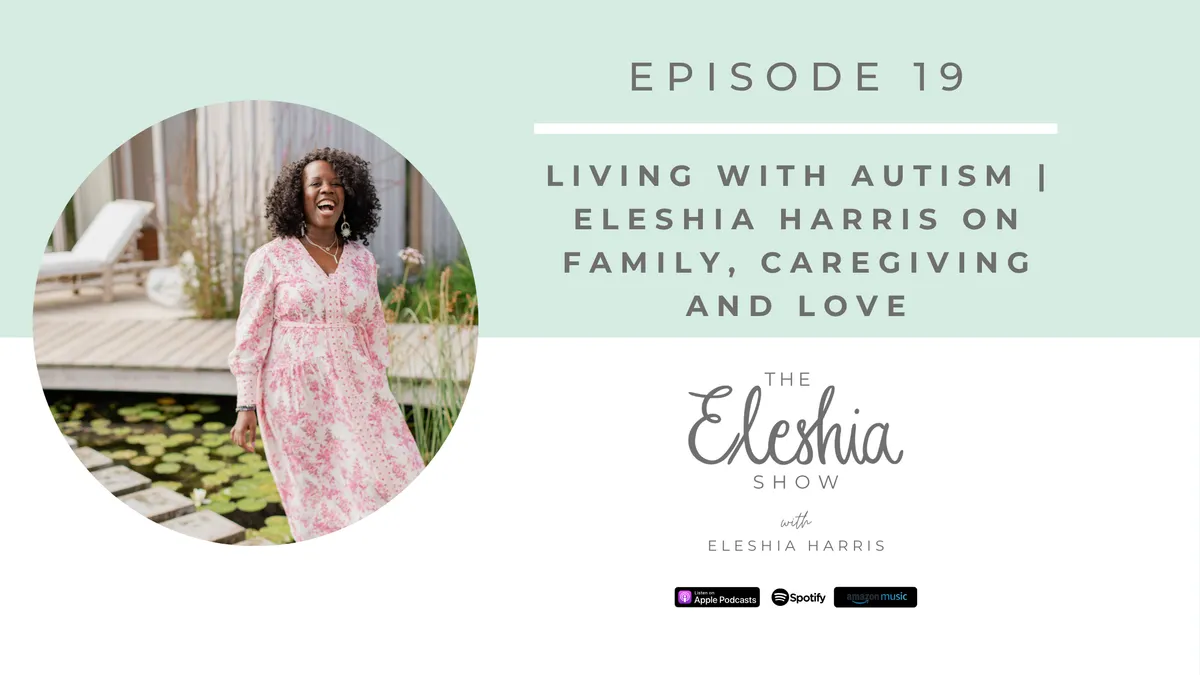
Episode 19 | Living with Autism | Eleshia Harris on Family, Caregiving and Love
Listen to the Episode
Also available on:
Welcome to The Eleshia Lifestyle Podcast
What does it mean to care for someone you love while allowing them the independence to live their own life?
In this deeply personal solo episode, Eleshia Harris opens up about her experience as a sister, mother and main carer to her younger brother, Jordan, who is autistic.
Following the loss of her mum, Eleshia took on greater responsibility for supporting Jordan while also building her business, raising her daughter and navigating family life. She shares the realities of balancing these responsibilities, from the constant concern for a loved one's safety to the importance of patience, understanding and allowing room for independence.
Eleshia also challenges the assumptions people can make about autism and caregiving. She explains why she sees Jordan as a whole person first. Someone with his own personality, strengths, challenges, ambitions and sense of humour, rather than defining him by his diagnosis.
This is an honest conversation about love, grief, responsibility, family dynamics and the importance of recognising the person behind the label.
In This Episode
Eleshia shares her personal reflections on:
What it is like to care for her younger brother, Jordan, while also being a sister, wife, mother and business owner.
How losing her mum changed her responsibilities within the family.
The assumptions and stereotypes people can hold about autism.
Why seeing Jordan as an individual matters more than defining him by his diagnosis.
The importance of patience, understanding and recognising that people experience the world differently.
Supporting independence while worrying about a loved one's safety.
How changes to routines during the COVID-19 pandemic affected family life.
The challenges of balancing the roles of sister and carer.
The importance of support from family and trusted people.
Why carers need to be recognised as people who give care out of love, not simply viewed through a lens of sadness or sacrifice.
Quote of the Episode
“Sometimes when people talk to carers, they are always so sad about the situation which doesn't always make us as carers feel good.”
— Eleshia Harris
Eleshia's words highlight an important part of caregiving that can be overlooked: caring for someone can be challenging, but it can also be an expression of love, loyalty and family connection. Carers need space to speak honestly about the difficulties without having their entire experience defined by them.
Episode Summary
In this solo episode, Eleshia shares what life has been like as the main carer for her younger brother, Jordan, who is autistic.
She begins by reflecting on the questions and comments she often receives from other people. Some express surprise at how she manages her responsibilities; others ask about Jordan's future and the level of care he will need. Eleshia uses these conversations as an opportunity to explore how society views autism and the assumptions people make about autistic individuals.
For Eleshia, Jordan has always been her younger brother first. She recognises that he experiences certain aspects of life differently from her, but she also sees his intelligence, humour, kindness, achievements and individuality. She shares examples of his education and work experiences to illustrate why it is important not to place people into restrictive boxes based on a diagnosis.
The episode also explores the impact of grief and family responsibility. Eleshia knew she would help her mum care for Jordan, but she had not expected to take on such a significant role following her mum's death. Making that commitment was connected to her love for her mum and her desire to ensure that Jordan continued to be supported.
At the same time, the relationship is not always straightforward. Eleshia describes the challenges of being both Jordan's sister and his carer, particularly as he grows older and wants greater independence. She worries about his safety when he is out in the world, while recognising that supporting him also means giving him opportunities to make his own choices.
She discusses the additional difficulties created by changes to routines during the COVID-19 pandemic, as well as the need to help Jordan navigate social expectations and situations in which other people may not understand his needs.
Eleshia is also honest about the emotional demands of balancing caregiving with raising her daughter, being a wife and developing her business. She acknowledges that more support would sometimes make things easier, but she is clear that caring for Jordan is something she does from a place of love.
Ultimately, this episode invites listeners to look beyond assumptions, recognise the individuality of autistic people and understand the complex realities of family caregiving.
⭐ Put It Into Practice
This episode is rooted in Eleshia's personal experience. Every autistic person and every family is different, so these reflections are invitations to think more deeply rather than rules that will apply to everyone.
1. See the person, not just the diagnosis
Think about the language you use when talking about autism and disability.
A diagnosis can help explain some experiences or identify support needs, but it does not tell you everything about a person. Take time to understand the individual's interests, strengths, preferences, personality and ambitions.
As Eleshia's experience with Jordan demonstrates, a person is always more than a label.
2. Challenge your assumptions
Consider where your understanding of autism comes from. Is it based on personal relationships, the experiences of autistic people themselves, reliable information or media portrayals?
Try to remain curious rather than assuming that one person's experience represents everyone.
Listening to autistic people and respecting their own descriptions of their experiences can help create a more informed and inclusive perspective.
3. Balance support with independence
Supporting someone does not mean making every decision for them.
Where appropriate, think about how you can help a loved one develop confidence, make choices and take part in everyday activities while ensuring that necessary support and safety considerations are in place.
The right balance will depend on the individual, their preferences and circumstances. Independence can look different for different people.
4. Recognise the different roles you hold
Family relationships can become complicated when you are also a carer.
You might be a sibling, parent, partner or friend while taking on additional responsibilities for someone you love. It can be helpful to acknowledge that these roles may sometimes feel in conflict.
Give yourself permission to recognise the complexity of your relationship without feeling that you have to reduce it to one role.
5. Make space for honest conversations about caregiving
If you support a family member, consider whether you have people with whom you can speak openly about your experience.
You may feel love and gratitude alongside worry, frustration, exhaustion or uncertainty. These feelings can coexist.
Having a trusted person who listens without judging you or assuming you are unhappy with your responsibilities can make a meaningful difference.
6. Think about routines and transitions
Eleshia describes how changes to Jordan's routine during the pandemic created additional challenges.
For some autistic people, predictable routines can be important. If you support someone who benefits from consistency, consider how changes can be explained, prepared for and managed in a way that respects their needs.
Ask the individual what helps them, rather than assuming that everyone will respond in the same way.
7. Consider how the wider world affects the person you support
Eleshia reflects on her concerns about Jordan navigating public spaces and being misunderstood by people who do not know him.
This raises a wider question about inclusion: how can communities, workplaces and public spaces become more understanding of people whose communication or behaviour may differ from expectations?
Rather than placing the entire responsibility on individuals and their families, we can all contribute to environments where differences are treated with respect.
8. Remember that carers need support too
Caring for someone can be meaningful, but it can also take time, energy and emotional resources.
Think about what would help you sustain your own wellbeing. That might include sharing responsibilities where possible, asking for practical help, making time for relationships or seeking support from appropriate services.
You do not have to wait until you feel overwhelmed before acknowledging that you need support.
🔑 Key Takeaways
A diagnosis does not define a whole person. Everyone has their own personality, strengths, needs and ambitions.
Autistic people are individuals. Experiences and support needs vary, so it is important to avoid generalisations.
Caregiving can be an expression of love. It can also bring complex emotions and responsibilities that deserve to be acknowledged.
Supporting independence matters. Care and safety can be balanced with opportunities for choice and autonomy, according to individual circumstances.
Family roles can be complicated. Being a sibling and a carer at the same time can create challenges that are not always visible to others.
Inclusion is a shared responsibility. Greater understanding can help reduce stigma and make everyday environments more welcoming.
Carers deserve to be heard. Their experiences should be recognised without assuming that their lives are defined only by difficulty or sacrifice.
🌿 Eleshia's Reflection
This episode is particularly close to my heart because it is about my family and the responsibilities I carry as a sister and carer.
When my mum passed away, I knew that I wanted to continue looking after Jordan. It was something I had always understood would be part of my life, but I had not expected to take on that responsibility in the circumstances I did.
Balancing that role with being a wife, a mother and a business owner has not always been easy. There are times when I worry about Jordan's safety, times when our different roles within the family create conflict, and times when I wish there were more support around us.
But I also want people to understand that I do this because I love him. He is my brother. He has his own personality, achievements, humour and way of seeing the world. His autism is part of his experience, but it is not the entirety of who he is.
One of the things I find difficult is when people speak to me about caregiving only from a place of sadness. I understand that they may be concerned or may not know what to say, but I also want them to see the love, connection and ordinary moments that are part of our family life.
I am learning that supporting Jordan also means recognising his need for independence and allowing him to have his own experiences, even when that makes me worry.
I hope this conversation encourages you to look beyond labels, listen to the people and families around you, and approach caregiving with greater understanding.
💬 Conversation Starters
Take a few moments to reflect on these questions:
When you meet someone with a disability or a different way of experiencing the world, do you find yourself making assumptions before getting to know them?
How can you learn more about autism by listening directly to autistic people?
If you care for a family member, how do you balance your different roles and responsibilities?
What does supporting independence mean within your own family or relationships?
How can friends and relatives offer support to carers without making assumptions about their experiences?
What could your community do to make everyday life more inclusive?
You don't need to have personal experience of autism or caregiving to reflect on these questions. Greater understanding begins with listening, curiosity and a willingness to challenge assumptions.
🔗 Helpful Resources & Related Episodes
A Book Eleshia Mentions
Tender: The Imperfect Art of Caring by Penny Wincer
Eleshia mentions this book as something that encouraged her to think about the different experiences and perspectives involved in caring for someone with additional needs.
It offers a starting point for further reflection on caregiving and the people behind the roles they hold.
Continue the Conversation: Mindful Parenting
If you enjoyed this episode, listen to Episode 18, Why I Decided to Parent Mindfully with Marisa Raymond.
In that conversation, Eleshia explores mindful parenting, family communication and the importance of helping children feel seen and heard. It complements this episode's reflections on family relationships, boundaries and understanding individual needs.
Explore More Conversations
Visit Latest Conversations on The Eleshia Lifestyle website for further episodes about wellbeing, personal growth, family life and managing the many responsibilities we carry.
Continue Listening
Thank you for listening to The Eleshia Show.
If this episode has helped you think differently about autism, family caregiving or the importance of seeing people beyond a diagnosis, consider sharing it with someone who may appreciate the conversation.
You can also follow the podcast and leave a rating or review on your preferred listening platform.
Let's keep creating space for honest conversations about family, care, inclusion and the different ways we experience the world.
Until next time, take care of yourself.
Eleshia Harris
The Eleshia Lifestyle Podcast
Prefer to read? Browse the full transcript below, or listen using the player above.