Episode 2 | Why It’s Important To Be In The Right Relationship With Grief | Uma Girish
Why It’s Important To Be In The Right Relationship With Grief
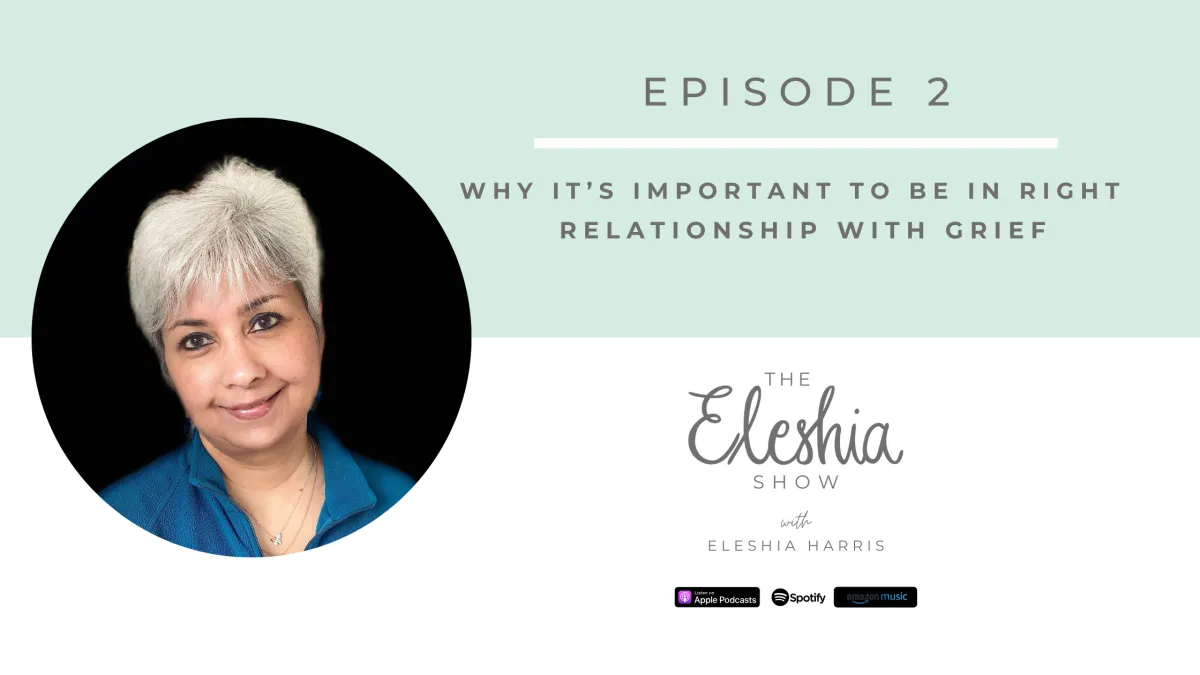
Featuring Uma Girish
Welcome
Grief is something we will all experience, yet few of us are taught how to navigate it. Whether it's the loss of a loved one, the end of a relationship, a career change or another significant life transition, grief has the power to reshape our lives.
In this powerful conversation, I sit down with grief mentor and author Uma Girish to explore how developing a healthy relationship with grief can help us heal, grow and reconnect with our purpose. Together, we discuss why grief isn't something to avoid but something to acknowledge with compassion and understanding.
Listen to the Episode
Or listen on:
In This Episode
Why grief is more than losing someone you love.
Understanding the difference between surviving grief and growing through it.
The importance of allowing yourself to feel every emotion.
How grief can reveal your purpose and reshape your future.
Practical ways to support yourself and others through loss.
Why everyone's grief journey is unique.
"My definition of living a meaningful life is waking up every morning focused on what I'm here to create, how I can help somebody, and live my life on purpose." — Uma Girish
Episode Summary
Loss has the power to change every aspect of our lives, but it can also become the beginning of a deeper understanding of ourselves. In this episode, Uma Girish shares her own journey through grief and explains how facing loss with honesty and compassion can lead to healing, resilience and renewed purpose.
Together, we explore the many forms grief can take, the importance of accepting our emotions and why there is no right or wrong way to grieve. This conversation offers reassurance, hope and practical wisdom for anyone experiencing loss or supporting someone who is.
Key Takeaways
Grief is a natural response to loss and deserves compassion.
Healing doesn't mean forgetting; it means learning to live alongside loss.
Purpose can emerge from life's most difficult experiences.
There is no timeline for grief.
Self-compassion is essential during periods of loss and change.
Prefer to read? Browse the full transcript below, or listen using the player above.
Read the Full Transcript
Intro: Hi, I'm Eleshia Harris and I am your host of The Eleshia Show. I am also the founder of eleshialifestyle.com and I'm so excited that you're here with me and I am here with you. I'm also really appreciative. Each week, I'll be sharing strategies and stories and insights to help you enhance your well-being and to build your business while still navigating life because sometimes we often try and separate the two. And let's face it, if you are not well, you have no business. So let's try and work with these two things combined because we can, to enhance your lifestyle.
Again, I'm really excited to have you here. I have wanted to put together a podcast for over two years. And so here I am ready to share. Let's get into this week's episode.
The first conversation that I ever had with Uma, I cried my eyes out. I had not realised that I was in such need of her comfort in words. I really wished that I had known her back when I was starting my grieving process back in 2015. Uma is such an amazing soul. She does such phenomenal work for and with people who are grieving. And I am so honoured that I got to have a conversation with her for the podcast.
Uma serves in areas of loss, grief, and sole purpose. She is a teacher and a trainer certified by Cambridge University in the UK. She also holds a certification in Dream Coaching and has trained in healing intergenerational trauma. She's also a trained human design reader, and I'm really excited to have her back on the show at some point So we can discuss that topic because I'm really fascinated about that. She facilitates workshops and virtual events and has been invited to speak at conferences and virtual summits. She is published and is an award-winning author. Two of her three books have been published by Hay House. I really hope you enjoy and you take some lessons from the conversation that Uma and I had.
I also just want to dedicate this episode to some of my loved ones that I know are going through a really hard time at the moment. I just want you to know that you are not alone and I'm here. Enjoy this episode.
Eleshia: Uma, it's so lovely to have you here and to be having this conversation with you. It's really fitting that we are having this conversation right now. I am in the middle of a huge declutter of my mom's house. So I'm having a lot of feelings come up and I've been in my feelings and this will be just about her because we're going through a lot of her things. So for me, it's nice to have you as some support, to just have a great conversation about grief, how we process grief, and the things that we can do to honour ourselves with the feeling that we're having, but also how we can help ourselves in that moment also.
Uma: Yeah, thank you for inviting me to this conversation. I am so honoured to be here.
Eleshia: I'm honoured to have you.
Uma: It's such a beautiful connection that we can have through the story of humanity, which always involves loss. I'm so sorry that you're grieving your mother's loss. It's a loss that feels very intimate to me because it was my mother's passing that started me on my transformational journey and everything that I've achieved up until this point.
And I always like to say that loss is what connects us, no matter our country, our ethnicity, faith, background, religion, the colour of skin, all of that falls away when we experience the heartbreaking loss because then we begin to speak the language of grief and the language of grief is something that all of humanity knows how to speak.
Eleshia: Yes. Wow. That really hit home because you're right. We do ignore it. And we're not equipped for it, I guess because I have experienced loss before, but obviously it was a lot different with my mum because she is the person that brought me into the world. She was the one that made sacrifices for me. She was the one that I would ring when I wanted advice or when I want it a recipe or when I wanted to learn how to do something, she was that person that I would call. So losing her was heartbreaking, but I also kind of just pushed it down to be able to really just continue with moving forward.
And it wasn't until 18 months later that I had it within me to actually start my grieving process properly because before then I distracted myself.
Uma: That's what most of the world does because like you very correctly said, we don't have the skills. Nobody taught us how to grieve. Nobody even gave us permission to grieve because the world classifies emotions as good in bed, most people do. There are good emotions that we want to be feeling all the time. And then there are the bad or unpleasant or negative emotions that we want to avoid at all costs, and grief happens to be in that box. So anything that causes us pain makes us avoid it because we are hardwired to feel pleasure. We gravitate to pleasure as humans and we try and avoid pain to the extent that we can.
But I know from personal experience, that grief is the biggest teacher because it won't let you not feel it. You can try to hide from it. You can deny it. You can push it away. You can pretend it doesn't exist, but grief will eventually find a way to trip you up.
Eleshia: And it's usually those times when you're not expecting it to come and trip you up. When you're in the supermarket or you're in the car and you're driving or somebody smells off your mom's favourite perfume and it's just like a punch to the stomach. That's the only way that I can really explain it where you just feel this emotional and physical hurt at the same time. And that's exactly how I felt that time when I completely broke down.
As I said, 18 months after my mom had passed, I literally just broke down and couldn't control myself for half an hour. And my husband was just looking at me. It was just like, I don't know what to do with you.
Uma: Oh, that's so your husband and my husband's and most of the husbands in the planet, let me tell you.
Eleshia: But thankfully he just let me get it all out. He literally just let me get it all out. And he said nothing and he was just really supportive. That was my breakthrough to really understand that I couldn't just continue to suppress that feeling. And I had to lean into feeling the grief and realising that she wasn't coming back.
Uma: That's the hardest thing to accept. Now, quite unlike you, I'm a crier. I cry when a baby is born. I cry at weddings. I cry when I watch a sunset. So I couldn't stop crying when my mother died. It started the moment I got the news and I just cried and cried and cried for months and months and months. So the question my husband asked me was when are you going to stop crying?
He tried everything he knew how to do, and my grief and sadness seemed bottomless to him. And he said when are going to stop crying. And I remember saying to him, I honestly don't know. There are so many tears inside of me and there's no way I can measure them. I'm going to keep crying until it all comes out. And there's no way I can tell you I'm going to stop crying next week or next month or two weeks from now. I have no way of saying that. And that's the truth.
Eleshia: Yes, because you don't know when it's going to stop. And as you said, it gets you at this stage where you don't even realise it's coming. So when people would say to me, Eleshia, I'm really sorry. It will get easier. Does it? I can say I've been able to manage it a little bit better, but does it get easier? No, it's not got easier for me.
Uma: It takes as much time as it needs to take. It's different for everyone, it's as unique as your fingerprints. So the way you grieve is going to be very different from the way I grieved or how somebody else grieves. And the way the world tries to comfort you with platitudes like it will get easier or God only gives you how much you can handle, that sounds really jagged to our ears. It sounds insensitive, but that's just the world's way of trying to help us feel better.
And one of the things I discovered very quickly when my mother passed away is that people don't know what to do with our grief. Not everyone has the capacity or the ability to sit with us in the fire of loss. So either they will leave because they can't take the heat. You will have good friends fall away. Or the ones that stick around, we'll try to fix you. We'll try to cure you. We'll try to get you to join the fabric of life. We'll try to do things that they believe will help you become a happy person again because if you go back to being a happy person, they can be happy. That's the person they know, that's the person they've lost because of your grief. That's the person they want to reconnect with.
Eleshia: That is such a good point. And I think we have to recognize that as well, that sometimes it's just their coping mechanisms as well. They don't mean harm to us, but they honestly don't know what to do with us.
Uma: And a script that I often give my clients is because when you're feeling so heartbroken, there's no part of your heart that has room for what somebody else is saying, which you are receiving as insensitive.
So I often say to people who work with me, my clients; say to your friend, I'm heartbroken. I'm experiencing deep grief at this moment, and I have no idea how long it will take. It'll take as long as it needs to. So if you can't be with me here, there's every reason why you can't be with me. It's fine. You're free to leave or you're free to just give me some space. And when I'm ready, I will re-engage. So you let them off the hook very gently.
Eleshia: That's such a nice way of doing it and I really wished that I had that tool and that script when I was going through that, because I spent a lot of time thinking what's wrong with me and why is this person not there for me. That's a very good script to have because it makes sense. You sometimes just can't see the wood from the tree. So imagine the person that is trying to support you, you arcs in a lot of them as well.
Uma: So you just gently let them off the hook and say, I don't know, this is new for me. This territory is new. I don't have a map for how long this journey is going to pan out and I understand that you can't be with me and it's okay that you can't be with me. So when you give them the space to leave, then they don't have to keep trying to fix you and get you to feel better. You've just given them permission to go away and do their thing. And when you're ready to re-engage, then you can go back to them if you're still the same person who wants to feel the connection with them.
Most times, if it's been a transformation, a loss, it changes you. So some of your friendships have to follow it because the things that bound you to each other before your loss no longer matter to who you become after the loss.
Eleshia: That's deep, Uma because then you're not just grieving the person. You're actually grieving the relationships around you as well. You're grieving how your life used to be. And that's how I felt. I felt like it wasn't just, I'd lost my mom. I had lost the life that I knew. I became a full-time caregiver to my brother overnight. I had to adjust to that and I grieved my job. So I had all of these things that were being thrown at me and no real way of supporting myself. And this is why, as I said to you before, it's so important for me to have these conversations, especially with you about what support systems you can be putting in place to help you if you go through these types of grief. I think that's what I wanted to say.
Uma: Yeah. But what you're saying makes a lot of sense because they're just the primary loss and there are a whole lot of secondary losses, which is what you're talking about. And it's no different even when someone, let's say a woman loses her husband, she loses the circle of friends they knew as couples. That's a secondary loss.
So every loss brings with it a series of secondary losses as we lose our ability to navigate life like we used to because life isn't the same anymore. It's different. And so you have to say goodbye to life as you knew it, which involves a whole set of circumstances and a whole bunch of people. Those are all secondary losses.
Eleshia: Tell me and the listeners a little bit more about your journey of how you have come to do the work that you are doing now.
Uma: Well, thank you for asking. It was the spring of 2008 when my husband, my daughter who was 15 and I moved to the United States from India. I was 44 years old and we were getting ready to begin a new life in the US. Two weeks after we moved from India, my mother in India was diagnosed with stage four cancer. She was only 68, so we thought she would beat it. She didn't, she died eight months after her initial diagnosis.
So I was in a new country with no friends. I had a bit of a rocky relationship with the only sibling who was near me, my brother at the time when I flew back to India for her last rite. And I saw her body on the floor of her home because, in the Hindu culture, we bring the body home. We paid the body and the last rites are performed with a priest in the home of the deceased person. And then the body leaves for its final journey to the crematorium because we cremate our bodies.
So my sisters and I actually performed the last rites with the priest instructing us what to do. So we draped her body in a beautiful silk sari. We rubbed turmeric paste on her cheeks. We placed a rose garland, and I stepped away and there was this one thought that just punched me in the gut. And that thought was we come into this world with nothing. We leave with nothing. Why do we spend all our time and energy chasing after stuff, accumulating, acquiring the bigger car, the bigger home, the better job, the promotion, more money, everything that has to do with the material realm of things.
And that question was the beginning of a whole series of questions and the three most important questions that churned in my head were, who am I, why am I here and what am I meant to do with this life. So that was where my own transformational journey began. My soul started speaking to me in a way that I could listen and hear its messages.
And I made a commitment to my soul that if my mother could die in eight months and we didn't have a clue that this was around the corner if she could die so unexpectedly, then what guarantee do I have of how much time I have left here on the planet? And so I'm going to get busy with the task of creating my legacy, with the task of reflecting upon what truly matters to me.
Because here's the thing, everyone remembered my mother. My mother didn't spend a single day working outside the home. She was a housewife. She cooked and cleaned and took care of the family. That's what she did best her entire life. And so one might say it was a rather ordinary life but the amount of love that she created in those 68 years, the simple people that she touched, those people came up to me and with tears in their eyes spoke about how loved they felt by her.
And I began to understand that we don't really take anything with us. What we leave behind, the love that we create and leave behind is what truly matters. And that's when I made it my life's mission to focus on my legacy, what I want to do, my sole purpose, to leave my heart print on the world.
And I became a hospice volunteer. I volunteered for five years as a bedside companion to the dying and worked with bereaved family members. And I started helping women who are grieving a loss. That was the beginning of my journey. And my whole premise is we're all here for a purpose. This life is not random. You're not here just because somebody puts you here. There's great purpose in your life. And when you're going through pain, the only thing you can do is transform your pain into purpose. Pain as the biggest transformational portal into purpose.
So that's what my life has become about Eleshia and I live my life on purpose. I wake up every morning focused on what I'm here to create, how I can help somebody. That's my definition of living a meaningful life today.
Eleshia: Wow. So what you just said, if you can see me, I'm falling my eyes out because to be there, to have gone through such a transformation yourself, and then to realise that you wanted to help others who are going through their loss as well is it's just so beautiful.
I, thank you for sharing that with me. I had read your bio and I've done some research, but to hear you say that it just hit me right here, that you would be so selfless to put yourself in that situation, even though you know how hard it is to watch somebody that you love leave. That you would be there to help other families and to help others when they were going through the same. That's so precious.
Uma: My husband had the same concern when I was grieving my mother. He said you are in so much pain. Why do you want to go hang out with people who are dying? You should be with people who can lift you up and make you happy and make you smile.
And I said to him, I don't know how to explain this to you. I don't have the words for it, but every time I leave that hospice center, I feel elevated and expanded. I don't know what it is. I don't know why it is so, that's my experience. And that's how I know, this is what my soul wants to be doing. This is how I'm healing from my mother's death.
So it's not making me worse. It's actually making me better through serving other people who are walking in similar shoes because I understand their pain. Who better to understand their pain than someone who's also feeling the void of the mother's death. And I don't know why, but that was the only thing that made sense to me. Took me 18 months to two years when I didn't have a job, I was simply volunteering, serving in nursing homes, retirement communities because my soul wanted to be doing that. I call that period as the apprenticeship of soul.
Eleshia: I love that apprenticeship of myself. That's so beautiful. Uma, you're amazing. You truly are. I'm so in awe of what you've just said. Some people say to me, how do I take care of my brother? And it's just what I do because he's my brother, but you were doing that for strangers and that's huge.
Uma: It's something that I had to be doing. Like I said, there's no logic or reason or rationale as to why I didn't put I did, but I kept telling the universe to use me. Every morning I woke up, I would say, dear God, use me. Use me to heal somebody today. I wasn't saying heal the planet, heal the world because those seem like impossible missions given where I was. But I said, help me be a healing force in somebody's life today. May I use my body and my breath to make a difference in some small way in somebody's life?
And when I went with that prayer, when I walked into my day with that prayer, carrying that prayer in my heart, I would go knock on the door of some elder. I didn't know what they needed, but it would be the perfect, perfect opportunity to serve. And they needed something from me that I had the ability to give them.
So I knew that the universe was guiding me every step of the way. And when your intention is clear and you come from a loving place of service, the universe will guide you every step of the way. All you need to do is focus on the intention that you carry into your day. So every step of the way, I felt guided. I just went where the universe led me and one thing led to another. And that that's just how my story unfolded.
So I didn't have a strategy or a plan or a business niche. There was none of that, Eleshia. My story is quite different. I mean, I didn't plan on becoming a hospice volunteer. I didn't plan on becoming a grief guide. I didn't plan on becoming a spiritual mentor, which is what I call myself today because I've expanded who I am and how I serve in so many different directions. But it was just a very organic evolution of my soul purpose.
Eleshia: Wow. So did you feel that apprenticeship really helped you with your grieving process? I know you were saying that your husband said, why did you want to do that but did you feel that, that really helped you?
Uma: I can say without a shadow of a doubt, it was the only thing that helped me. So this is what happens when we have a loss of some kind, we are in scarcity and lack. Something has been taken away from us, whether it's a relationship, whether it's a person, whether it's a job, whatever that is. And I didn't make sense of all of this at that time, but looking back, I can speak about it more eloquently.
When I became the source of kindness, of love, of care of companionship to another, I couldn't be focused on scarcity and lack. I was focused on the abundance of my spirit because I was serving from a generous spirit. The Holy Spirit, as you might refer to the Divine, kept filling me up. And every day I was filled up, my bank was filled up so I could make deposits into other people's lives. So when that happens, you come from a generous, abundant spirit. And what better way to heal yourself than feeling that you have everything you need to heal somebody else. And so you have everything you need to heal yourself.
Eleshia: Because I'm learning, it's just such an open conversation because I did what was necessary for me to cope, my coping mechanism. But throughout the years, now, I've really focused more on what I need, not what everybody else needs. And so just hearing you say what you said so eloquently, makes so much sense.
Uma: I also want to honor everyone's journey. Everyone is where they need to be. So there's no sense of, I couldn't do this, or I was unable to do something with my grief. Everyone is where they are. And so wherever you are, and I say this to every listener listening to this conversation, honor yourself for where you are and do what you can.
Sometimes, it's best to give from a full cup. If you feel empty and broken and you really can't even put one foot in front of the other, the person who needs the most assistance and helps and healing in that circumstance are you. So turn inward and do what you need to do for yourself. Everyone's journey is different. This was just my journey.
Eleshia: It's really important that you said that because everybody will be on their own journey. I dealt with it from a project management standpoint because that's what I knew. That's what I knew. I knew how to put things into boxes and actually work through those processes and strategies, or you didn't have a strategy, whereas I was working with those kinds of strategies that worked for me. Those were my coping mechanisms and the distraction until I had that many breakdowns when I was just like, I really have to give more to myself because if I don't, I won't be any use to anybody. And that was my biggest wake-up call.
At the time, I didn't have my daughter. I was the full carer to my brother, so I had to make sure that he was okay, but I had to be okay.
Uma: And that happened with my sister because my sister had to care for my father. My father had a road accident about 14 years before my mother died. And so she was caring for him in every way that mattered.
So when she died, my youngest sister became my father's primary caregiver and all of her energy and time went into making sure he was okay. So she tells me even to this day that her grief had to take a back seat because she couldn't afford to fall apart. My father depended on her. So your story sounds similar to hers cause you had to care for your brother and you had to put your emotions on the back burner.
Eleshia: As you said at the beginning, grief gets you, it really does. But there are, and I hate to use the word strategies, as you said, being kind to yourself and actually honoring yourself is so important, isn't it? Could you talk more about that, more about what maybe you would share with your clients to help them in the time of need?
Uma: So as a species, I think we're so used to milestones and goals and targets. Unfortunately, when it comes to grief and loss, none of these tools or strategies that you like to call them to work.
You can put a five-year plan in place, but it's going to fall apart. There is no five-year plan when it comes to dealing with loss. So the only thing you can do for yourself is wake up every day and say, today's a new day. I don't know what's ahead of me. I'm just going to take my first breath and then step into my day with the intention of being kind to myself.
If your intention is to be kind to yourself, so then you stop beating up on yourself. Oh, why am I still crying? I should be further along on this journey. You'll stop comparing yourself to other people who are also grieving a loss of some kind. But my sister is doing so well and she's back at work and she has small kids. I don't have kids. I should be further along and I'm not doing as well as she is.
We compare ourselves to other people. So when we are kind to ourselves, we can just say, this is who I am. My emotional map doesn't have to look like my brothers or sisters or neighbours or co-workers. This is mine. We're all different.
And so move into the day with the intention of kindness and accept yourself where you are. I mean, you may go through two days of the week feeling completely okay and normal and have more energy and show up for your life and work. And then on the third day, you may just fall apart. You may have a terrible morning.
It's part of the process. So my constant agenda or job is to just let my clients know that all you need to do is be completely and radically kind to yourself as you're moving through this loss. It doesn't matter what kind of loss it is. You are allowed to mourn this loss in every way that feels like love to you. You're feeling this because of the depth of connection you had with a person. I mean, think about that grief is a loss of connection. When Princess Diana died all those years ago. I mean, it wasn't the just UK that mourn. It was the entire world. I couldn't stop crying for a whole week. I didn't even know her I'd never seen her, but it was this connection.
That's why grief is a loss of connection. When you feel connected to a celebrity or singer and actor. You feel connected to the energy, walk there, stand for what they represent. So imagine that you feel this for someone in your family or a dear friend, it is the depth of love that you feel. And how can love be wrong? Why do we judge our grief so easily, how can love be wrong?
Eleshia: Thank you for saying that. I'm really glad that I asked that question because there was just such a wealth of information in that. How can we judge, just being kind to ourselves? I used to first say day by day. And then sometimes, it was actually hour by hour. And then some days, it was minute by minute. I just had to be kind to myself, as you said, and just watched how I was feeling throughout the day, just to get through that day.
Uma: So I always said, notice what you're doing, because we're so quick to notice what we're not doing, what we are not showing up for. Actually celebrate that today, I got out of bed, took a shower. Today, I washed my hair. Today, I was able to watch 15 minutes of a show that I like. Doing the right things, the positive things, and give yourself credit for that. We don't make a habit of celebrating what we've accomplished. We are always looking at how much further we have to go.
Eleshia: That is such a great point. I think I'm going to have to sit down and listen to this back again and just reflect and take notes of all of the things that you've said, because Uma, I wish I had you around six years ago when I was going through some of that.
Uma: I know, I wish I had known you too. It would have been such an honor to help you and journey with you through that experience.
Eleshia: I mean, obviously I'm still on the journey, but I can say that I am better at managing that journey. As I said, I can't say that it has been easier. I'm just getting better at managing how I feel and actually checking in on myself and putting myself first to make sure that I'm okay first.
I think this is a trait that I got from my mum. She put everybody first. Like you said at the beginning of the conversation when you were describing how people talked about your mum, that's exactly how they talked about my mum. She was there for everybody. So when it came to her funeral, it was huge. People that I hadn't seen for years who wanted to come and pay their respects.
If I'm being really truthful, I was angry, we didn't have more time. I was heartbroken, but I was angry. And I had to work through that anger as well. My mum passed away from cancer as well. I was heartbroken, but I was angry.
Uma: I completely understand you. So was I. I did a whole Facebook live on how I broke up with God. My whole understanding of faith and my connection with God underwent a metamorphosis. Because I was like, well, God doesn't even listen to me. I prayed so hard. What's the point? If God can't be present for me at this time and didn't save my mom, what's the point of praying. What's the point of believing and trusting in a God that doesn't show up for you when you need it.
And so I had to go through a whole radical understanding of who the divine is and what this journey is all about. This is why I say I called my experience of grief and loss, a deeply spiritual journey. I didn't go to therapy because I didn't want psychotherapy to fix me or give me answers. I wanted to dive deeper into the soul-level inquiry questions about why do we come here? Where do we go when we die? What's the purpose? How are we meant to live here? What is God? What is the soul? That's the work I do with my clients as well.
My focus is not so much on the grief and loss itself, we do talk about it. But the people, who come to me who are correct for me and who I'm correct for, are the ones who know that despite this heartbreaking loss, I know I'm here for a purpose. How can I find that sole purpose? They're very open and absolutely ready to receive my light wisdom and truth about their soul, about their journey or as spiritual beings having a human experience. So that's the work we do together.
Eleshia: And it's work that is really needed because we suffer in silence.
Uma: And it's so lonely in silence.
Eleshia: People will say to you, oh yeah, you're so strong. And I can't imagine what you're going through, but you're handling it really well when inside its a mess sometimes.
Uma: I wish more people would say, it's okay to fall apart. You don't have to be so strong. Just give yourself permission to cry when you need to. And if you need a friend to just hold space for you, I'm there. Unfortunately, like I said, we haven't been taught these skills. So our friends don't know how to hold space for us. They feel like they have to jump in and say something, or they have to share a story about their own loss, something that they've gone through in their life which is worse than what we just went through, which it'll make us feel completely alienated.
We're trying to say, listen to me, receive my story, hear me. And when someone jumps in with this story or their version of what loss looks like, we feel completely devalued at that moment. This is why people suffer in silence and they feel lonely because there's nothing more painful than taking your story of loss and what you're going through to a friend and then have your heart trampled on all over again.
Eleshia: Yes. Wow. That's the truth. Right there. So then as you said, you stopped talking about it. And you start to tell people, yes, I'm okay. I'm okay.
Uma: Yeah, because most people are comforted hearing that you're okay because then they don't have to now step in and say something awkward or do something. You can move on to other things, you can talk about books or movies or work or children or whatever that is. You've got off the awkward conversation and that's where most people want to land.
Eleshia: Yeah. Let's talk a little bit more about your work and your amazing books.
Uma: I have been a writer since I was a little girl. And so when my mom died the most natural way for me to make sense of what was happening was to write a book about it.
So I wrote a transformational memoir called Losing Amma, Amma's a word for mother in my language. Losing Amma, Finding Home because she was my first home. And when I lost her, I lost my definition of home. What is home? Where do I belong? Who do I belong to? And the journey of moving through that experience was about finding home again. Recognising that my soul is my home, that the divine is my home. That's where I came from and that's where I will return to.
But right before I wrote that book, I had all these burning questions about what is reincarnation? What is the soul? Where do we go after we die? It was like one moment my mother was there and then she was gone. Like, how does a person who has an entire history and entire life, someone you've created all these memories with poof, she's just vanished. Gone. So it was so hard for me, the knowledge that she was no longer in my physical space was devastating.
So I wrote a book called Understanding Death: 10 Ways to Inner Peace for the Grieving. Talking about the top 10 questions that I had, which most grievers I know now have when they're confronted with the loss of a loved one.
And then my third book is called Lessons from Grace: What a Baby Taught Me about Living and Loving, and that has nothing to do with the first two books. This came out of my experiences as a part-time Nanny to my friend's newborn baby. Her name is Grace. She's eight now, but that was such an amazing experience and she taught me so much. This drooling, spitting, pooping baby was like my Spiritual Guru. She taught me so much about life. And so I wrote this book of essays, which is a collection of all that she taught me. So those are my books.
And to answer your question about the kind of work I do with my clients. I have two group programs. So I'm taking a group of people through my six-month program called the Soul Purpose Sisterhood. I essentially work with women and the focus of this program is to help these women honour their deep heartbreak over the loss, and then help them get their soul purpose.
The second program, which is a new expression in this season of my purpose is working with women who find themselves in long-term marriages with a spouse or partner who does not understand this spiritual journey. This was my experience, following my mother's death because my life fell apart. And when I put myself back together, again, I had become a version of Uma that my husband didn't even recognise. Things that are important to me, the way I live my life, the values that I live by, and become so completely different that we will no longer look at a shared horizon. And yet we loved each other. We love each other dearly. We have a 27-year-old daughter.
We had to learn to navigate this marriage. How do you do that when one person in the marriage begins to walk a transformational path that her spouse is not able to walk on. So this program, which is called Sacred Soul Union, which we just started last week, it's a three-month program with women who are in long-term marriages who are experiencing the same thing. They're in a partnership with a man who doesn't get their spiritual journey. And so they have some secret resentment towards their spouse because they want to be sharing this big part of their life with their spouse. They can't. At the same time, they are scared to show up for their sole purpose because there is pressure from the marriage to say, you need to bring in a second income. You need to contribute to the family. And they don't have the courage to step into their soul's work and say, this is who I came here to be, and I'm going to play in this life.
So those are the two programs. I do one-on-one work with a very small handful of clients who are absolutely right for me. I'm very picky about the clients who work with me, and I want them to be picky about me. We need to be the exact right fit so that I can support them on this journey from lost to life purpose.
Eleshia: You're amazing. I know I've said it already.
Uma: You are amazing too.
Eleshia: Thank you. The work that you were doing in this season of your life, as you put it is just so needed. I applaud you for putting yourself out there to do it because these are two very vulnerable subjects that meant you had to look within too and come to it with your own experiences as well. To be able to serve others that are going through the same. That's just divine.
Uma: I truly believe that you go through certain experiences because you're meant to grow through them. And then you're meant to bring the gifts of that experience to others who are walking that path. So I take everything I know, and then I turn it into spiritual teachings, teachings of wisdom that other people can expand and grow through.
Yeah, that's my intention. Brilliant.
Eleshia: Thank you for holding space for me to have this conversation, but it's important to me from my own perspective, but it's also important for me to be able to help others with their journey as well. I think I'm going to have to have a lie-down.
Uma: And this is as deep and natural as it gets. I mean, this is real stuff we're talking about. So we can't Photoshop. We can't edit stuff out. This is life. And that's what I love about the work I do. I mean, when I meet a client or when I meet a podcast host like you or a friend, we are always meeting on the ground that is Holy and human and real. There's no other way to describe it.
So that's why I love these conversations. And I want to thank you so much for giving me the opportunity to share my thoughts and my journey with you and your listeners.
Eleshia: It's been such a pleasure. Again, thank you, Uma. Thank you.
Uma: Thank you so much.
Eleshia: Thank you so much for listening to this week's episode of The Eleshia Show. If you know somebody who needs to hear the conversations that we are having, please share it. Take a screenshot and send it to them. Also, I would really love for you to rate and review the podcast as this reading helps. And I'd love to read your comments. Lastly, remember, you need to invest in yourself first because you are important and amazing. Take care until the next time. Bye-bye.
About Our Guest
Uma Girish is a grief companion, spiritual mentor and author who supports women through grief, life transitions and discovering renewed purpose after loss. Her work encourages people to honour their emotions, embrace healing and create meaningful lives after loss.
Continue the Conversation
If this conversation resonated with you, subscribe to The Eleshia Lifestyle Podcast, leave a review and share this episode with someone who may need encouragement and hope today.