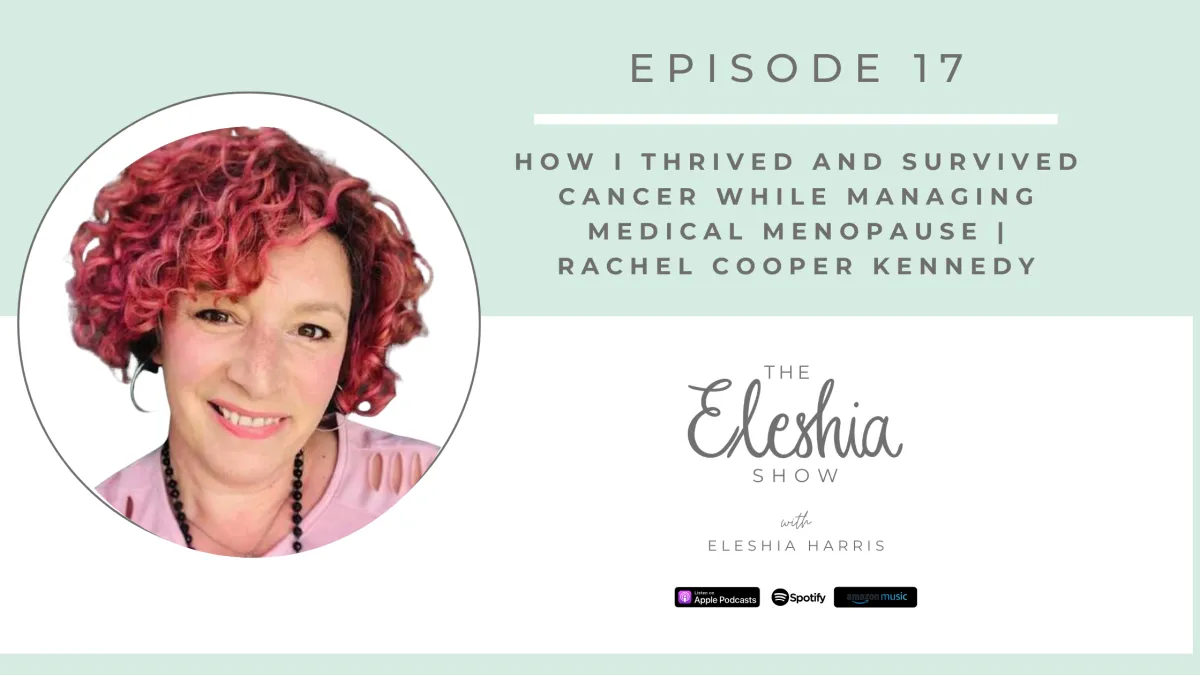
Episode 17 | How I Thrived and Survived Cancer while Managing Medical Menopause | Rachel Cooper Kennedy
Listen to the Episode
Also available on:
Welcome to The Eleshia Lifestyle Podcast
Cancer is a life-changing diagnosis, not only for the person receiving it but also for their family, friends and the people who support them. Yet conversations about cancer, treatment, body changes and the emotional impact of diagnosis can still be difficult to have openly.
In this episode, Eleshia Harris is joined by Rachel Cooper Kennedy, also known as Rachel C.K. — a breast cancer thriver and survivor, natural lifestyle coach, essential oils guide and host of the Natural Solutions Show.
Rachel shares her personal experience of being diagnosed with breast cancer in 2018, navigating difficult treatment decisions and learning to live with the changes that treatment brought to her body, including medical menopause.
Together, Eleshia and Rachel discuss the importance of being able to talk honestly about cancer, finding the right people to support you, understanding your treatment options and recognising the emotional challenges that can accompany a diagnosis.
This is a conversation about more than surviving cancer. It's about being heard, maintaining hope, finding support and making space for the difficult feelings that can come with a life-changing experience.
In This Episode
In this honest and personal conversation, Eleshia and Rachel explore:
Rachel's breast cancer diagnosis and the difficult decisions she faced.
Why noticing changes in your body and seeking medical advice matters.
The emotional impact of cancer treatment and changes to body image and identity.
Rachel's experience of medical menopause.
The importance of having a supportive network of family, friends and professionals.
How to have more open conversations about cancer, including the subjects people may feel uncomfortable discussing.
Rachel's experience of combining conventional medical care with complementary approaches to personal wellbeing.
Why people facing a diagnosis need understanding, information and the freedom to ask questions.
The role of hope, connection and emotional support throughout a challenging journey.
Quote of the Episode
“Knowledge is power, but actually understanding when, where, and with whom to share that knowledge is wisdom.”
— Rachel Cooper Kennedy
This quote captures an important theme of the conversation: information matters, but so does knowing how to use it, who to turn to for guidance and how to make informed decisions with the right support around you.
Episode Summary
When Rachel Cooper Kennedy discovered a lump in her breast in 2018, her life changed dramatically. In this episode, she opens up to Eleshia about her diagnosis, the fear and uncertainty that followed, and the decisions she had to make about her treatment.
Rachel describes the emotional impact of navigating cancer while also trying to support her family. She reflects on the importance of understanding the medical information presented to her, asking questions and finding healthcare professionals with whom she could build a trusting relationship.
The conversation also explores the effects cancer treatment can have on a woman's body and identity. Rachel discusses the changes she experienced, including the loss of her menstrual cycle and the challenges associated with medical menopause. These experiences highlight why women need more opportunities to discuss the physical and emotional effects of treatment without embarrassment or shame.
A central theme is the importance of support. Rachel explains how family, friends and other people around her helped her through difficult periods. She also shares how she developed a network of complementary wellbeing practices alongside her medical treatment, while Eleshia reflects on her own experience of supporting her mother through cancer.
Both women recognise that people diagnosed with cancer need more than information alone. They need people who are willing to listen, ask what would help, remain present during difficult moments and support them without making assumptions about what they should be feeling.
Rachel's experience has inspired her to help other women and holistic practitioners feel better equipped to have these conversations and provide appropriate support.
This episode is a reminder that no one should have to navigate a cancer diagnosis feeling isolated or unable to talk about what they are going through.
⭐ Put It Into Practice
This episode covers a sensitive and personal subject. These reflections are not a checklist for how anyone should respond to cancer; they are gentle prompts for thinking about support, communication and wellbeing.
1. Pay attention to changes in your body
Get to know what is normal for you and seek medical advice if you notice a new or unusual change. Do not dismiss a symptom simply because it is painless or comes and goes. If you are concerned about a breast change, contact a healthcare professional promptly.
2. Give yourself permission to ask questions
A diagnosis or treatment plan can involve unfamiliar language, difficult choices and a lot of information. Write down your questions before appointments, ask for explanations when something is unclear and request further support when you need it.
You deserve to understand the options being discussed with you.
3. Build your support network
Think about who you would feel comfortable turning to during a difficult time. Support might come from family, friends, healthcare professionals, counsellors, support groups or other appropriate services.
You do not need one person to meet every need. Different people may be able to offer different kinds of help.
4. Talk about the difficult things
Cancer can bring changes to appearance, relationships, confidence, intimacy and identity. These subjects may feel difficult to raise, but they are still important.
If you are going through treatment, consider speaking to a trusted person or healthcare professional about the physical or emotional effects you are experiencing.
5. Make room for your emotions
There is no single correct way to feel after a diagnosis. You may experience fear, anger, sadness, hope, uncertainty or several emotions at once.
Try not to judge yourself for how you feel. If the emotional impact becomes difficult to manage, ask your healthcare team about appropriate psychological or emotional support.
6. Discuss complementary approaches with your healthcare team
Rachel shares her personal experience of using complementary wellbeing practices alongside cancer treatment. Every person's circumstances are different, and complementary therapies, essential oils, supplements, dietary changes or other approaches can have risks and may interact with treatment.
Speak with your oncology team or pharmacist before starting anything new. Complementary approaches should not replace, delay or interfere with evidence-based cancer treatment.
7. Ask people what support they actually need
If someone you care about is going through cancer treatment, you may not know what to say or do. Rather than withdrawing because you are afraid of saying the wrong thing, ask a simple question: “What would be most helpful to you right now?”
Practical help, company, a listening ear or simply staying in touch may mean more than trying to find the perfect words.
8. Remember the people supporting the person diagnosed
Cancer can affect the whole family and wider circle of friends. Carers and loved ones may also need a place to talk, rest and receive support.
If you are supporting someone through treatment, remember that your wellbeing matters too. Reaching out for help is not a sign that you care any less.
🔑 Key Takeaways
Early attention to changes matters. Get new or unusual symptoms checked rather than making assumptions about what they mean.
You can ask questions about your care. Understanding your options and feeling able to speak openly with your healthcare team are important.
Cancer can affect more than physical health. Emotional wellbeing, body image, relationships and identity can all be affected.
Medical menopause deserves attention and support. Treatment-related hormonal changes can be challenging, and concerns should be discussed with an appropriate healthcare professional.
Support is not a luxury. Family, friends, healthcare teams and suitable support services can all play a role.
You do not have to have the perfect words. Being present, listening and offering practical help can make a difference.
Personal experiences are not universal medical advice. What helped Rachel is not necessarily suitable for everyone; treatment and complementary approaches need individual consideration.
🌿 Eleshia's Reflection
This conversation was particularly meaningful to me because my mum died from cancer. I wanted Rachel to share her experience, but I also knew that revisiting the subject would bring up some difficult emotions.
As someone who supported my mum through her diagnosis, I had experienced cancer from the perspective of a family member and carer. Listening to Rachel describe what it felt like to be the person receiving the diagnosis gave me another perspective and helped me understand more about what she had experienced.
It reinforced something I feel strongly about: we need to create more space for honest conversations about illness, treatment, fear and the realities that people may find difficult to share.
Sometimes people withdraw because they are frightened or do not know what to say. Others want to help but are unsure how. Yet the person going through the experience still needs connection, understanding and people who are willing to stay present.
I hope this conversation encourages you to listen more openly, ask questions and remember that the person behind the diagnosis has feelings, relationships, responsibilities and a life that continues beyond their treatment.
💬 Conversation Starters
Whether you are reflecting on your own experience, supporting someone else or simply learning more, consider these questions:
How comfortable do you feel talking openly about cancer and its emotional impact?
If someone close to you received a difficult diagnosis, who could you turn to for guidance on supporting them?
What does meaningful support look like to you during a challenging period?
How can we make conversations about medical menopause and treatment-related changes more open and compassionate?
Is there someone in your life who might need you to listen, check in or offer practical help?
You do not need to share personal experiences publicly to make these conversations matter. Sometimes a private, compassionate conversation is enough to begin.
🔗 Helpful Resources & Related Episodes
Connect with Rachel Cooper Kennedy
Rachel Cooper Kennedy, also known as Rachel C.K., is a natural lifestyle coach, essential oils guide, cancer support coach and host of the Natural Solutions Show. She shares her experience to help women and holistic practitioners better understand the support that may be needed after a cancer diagnosis.
To find Rachel's work and current contact details, start with the original Buzzsprout episode and show notes.
A Note About Cancer Treatment and Complementary Wellbeing
This episode shares Rachel's personal experience and views. It is not a substitute for medical advice, diagnosis or treatment. Experiences and outcomes differ from person to person.
If you or someone you support has been diagnosed with cancer, speak with the treating oncology team about treatment options, symptoms, menopause-related concerns, supplements and complementary therapies. Do not delay prescribed treatment or make treatment changes based on a podcast conversation.
Continue the Conversation: The Female Cycle and Learning to Live in Flow
If you enjoyed this episode, revisit the six-part series featuring Eleshia Harris and Mairi Taylor. The series explores the female cycle and how to better understand and work with the different phases of life.
Part 1: Harnessing the female cycle and learning to live in flow
Part 2: Learning to Love Your Menses
Part 3: Tuning into Your Venus Week
Part 4: Out Out with Ovulation
Part 5: Leaning into Your Luteal Phase
Part 6: Rock Your Menopause
These episodes offer further conversations about understanding the body and navigating different stages of women's health. Find them in Latest Conversations on The Eleshia Lifestyle website.
Continue Listening
Thank you for listening to The Eleshia Show.
If this episode has helped you think differently about cancer, medical menopause or the importance of emotional support, consider sharing it with someone who may appreciate the conversation.
You can also follow the podcast and leave a rating or review on your preferred listening platform.
Let's keep creating space for honest conversations, greater understanding and more compassionate support for women and the people who care about them.
Until next time, take care of yourself.
Eleshia Harris
The Eleshia Lifestyle Podcast